TP53
Official symbol
TP53
Official full name
tumor protein p53
Gene ID
7157
Gene type
-
Other name
BCC7,LFS1,P53,TRP53
Gene location
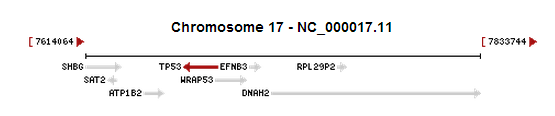
Gene introduction
This gene encodes a tumor suppressor protein containing transcriptional activation, DNA binding, and oligomerization domains. The encoded protein responds to diverse cellular stresses to regulate expression of target genes, thereby inducing cell cycle arrest, apoptosis, senescence, DNA repair, or changes in metabolism. Mutations in this gene are associated with a variety of human cancers, including hereditary cancers such as Li-Fraumeni syndrome. Alternative splicing of this gene and the use of alternate promoters result in multiple transcript variants and isoforms. Additional isoforms have also been shown to result from the use of alternate translation initiation codons from identical transcript variants (PMIDs: 12032546, 20937277). [provided by RefSeq, Dec 2016].
Cancer pathway
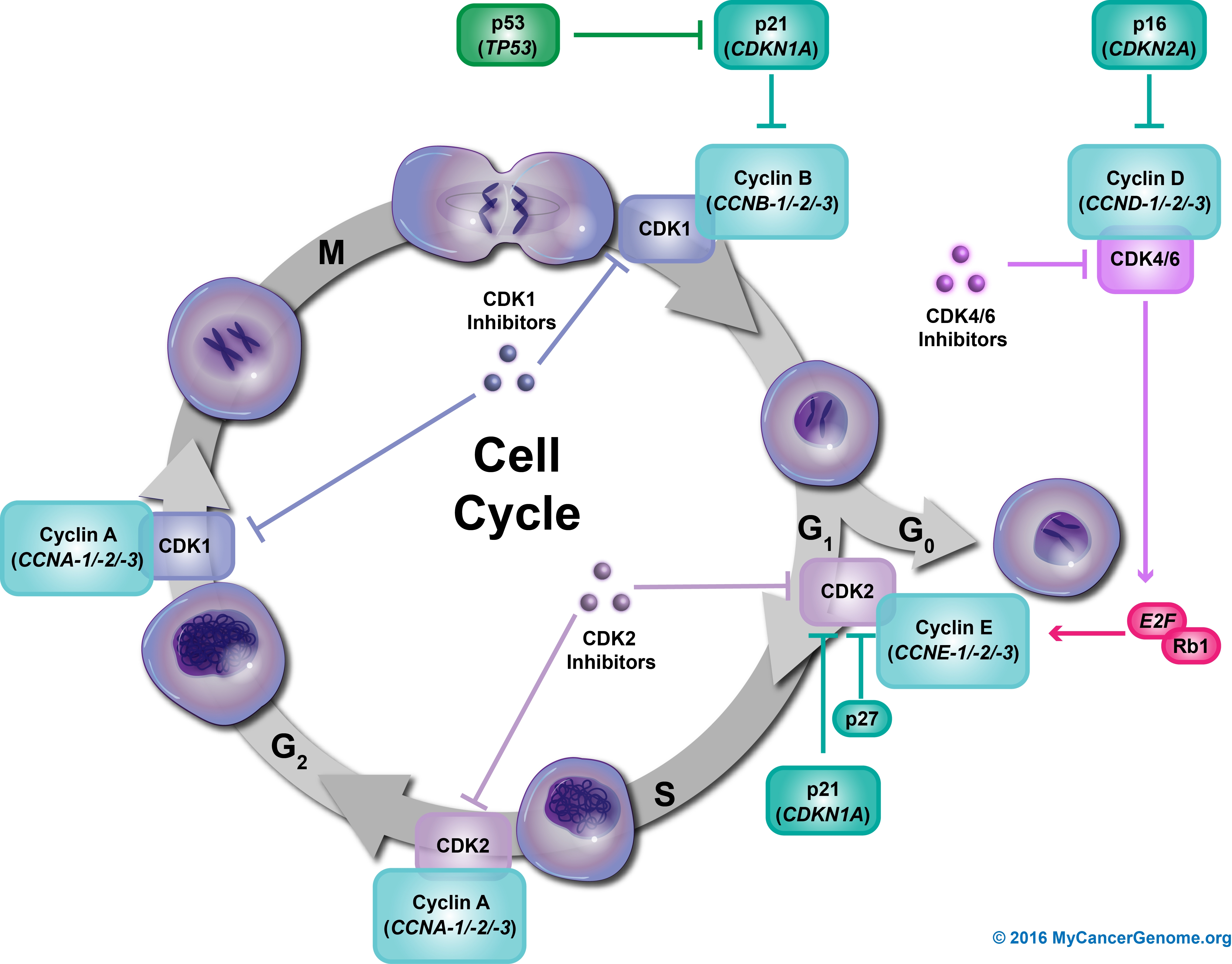
The main pathways: The cell cycle is a set of processes through which a cell divides to become two identical daughter cells. The cell cycle encompasses four phases including G1 (gap phase 1), S (DNA synthesis), G2 (gap phase 2), and M (mitosis). The cell cycle is controlled by the complex interplay of cyclin-dependent kinases (CDK -1, -2, -4, -6, -8, -12) and cyclins (cyclin -A, -B, -D, -E). Heterodimers of cyclins and CDKs function at different points in the cycle. There are several checks and balances, called checkpoints, in the cell cycle to ensure integrity of daughter cells. Checkpoints include the G1/S checkpoint and the G2/M checkpoint. Of particular relevance, p21 and p27 function as regulators of the G1 and S checkpoints. These checkpoints become important in the setting of DNA damage. DNA damage activates these checkpoints to ensure genomic integrity by repairing damaged DNA or forcing the cell to enter a programmed cell death pathway if DNA cannot be repaired. Checkpoints and DNA damage responses are altered in numerous malignancies. Specific nodes in the pathway that are therapeutically actionable are noted. Click here to open a larger version of this image in a new window.
Related to cancer
Tumor protein p53 (TP53) is a gene that codes for a tumor suppressor protein. The protein regulates expression of genes involved in cell cycle arrest, apoptosis, senescence, DNA repair, and changes in metabolism (Gene 2014). In cancer, TP53’s normal roles are not fulfilled, leading to cell survival, DNA damage, and cell proliferation. TP53 is the most frequently mutated gene in cancer; it is mutated in about half of all cancers. TP53 is most frequently mutated in ovarian, colon, and esophageal cancers, although it is significantly mutated in many other cancer types (COSMIC).
Alteration in cancer
| Gene | cDNA change | Protein change | Location |
|---|---|---|---|
| No data available. | |||
Related drugs in cancer
| Drug name | Other name | Product name | Type | Groups |
|---|---|---|---|---|
| No data available. | ||||