ATM
Official symbol
ATM
Official full name
ATM serine/threonine kinase
Gene ID
472
Gene type
-
Other name
AT1,ATA,ATC,ATD,ATDC,ATE,TEL1,TELO1
Gene location
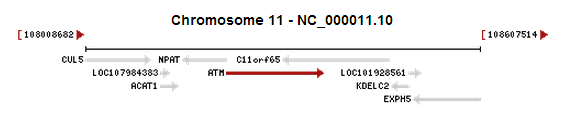
Gene introduction
The protein encoded by this gene belongs to the PI3/PI4-kinase family. This protein is an important cell cycle checkpoint kinase that phosphorylates; thus, it functions as a regulator of a wide variety of downstream proteins, including tumor suppressor proteins p53 and BRCA1, checkpoint kinase CHK2, checkpoint proteins RAD17 and RAD9, and DNA repair protein NBS1. This protein and the closely related kinase ATR are thought to be master controllers of cell cycle checkpoint signaling pathways that are required for cell response to DNA damage and for genome stability. Mutations in this gene are associated with ataxia telangiectasia, an autosomal recessive disorder. [provided by RefSeq, Aug 2010].
Cancer pathway
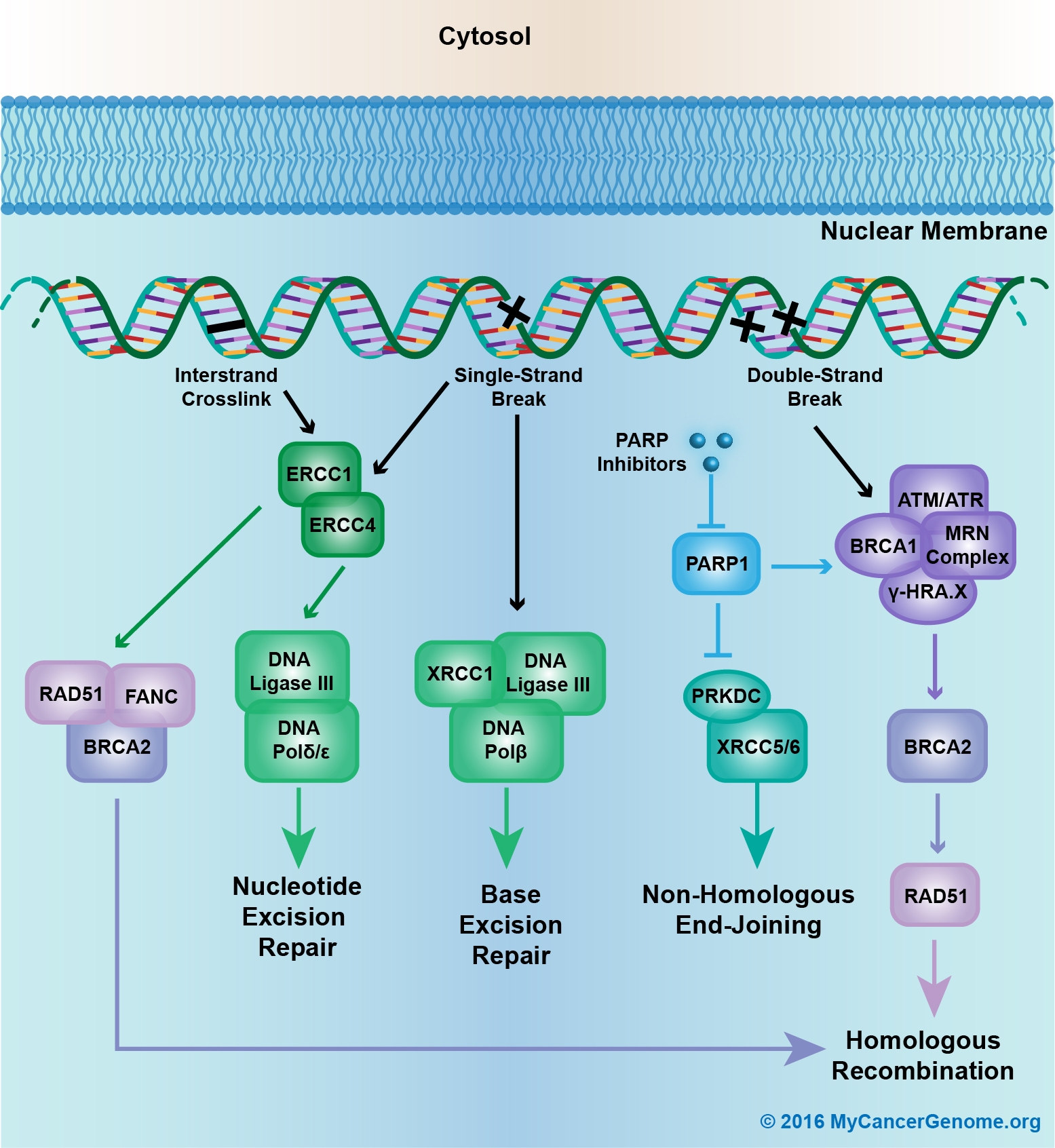
The main pathways: The cell signaling pathways that are involved in DNA damage are displayed. Excision repair cross-complementation group genes (ERCC-1/-4), X-ray repair complementing defective repair in Chinese hamster cells genes (XRCC-1/-5/-6), poly(ADP-ribose) polymerase 1 (PARP1), the Fanconi anemia gene complex (FANC-A/-C/-D2/-E/-F/-G/-L), Rad51 recombinase (RAD51), ATM serine/threonine kinase (ATM), ATR serine/threonine kinase (ATR), protein kinase, DNA-activated catalytic polypeptide (PRKDC), and the breast cancer, early onset genes (BRCA1/2) are included in the DNA damage pathway. Specific nodes in the pathway that are therapeutically actionable are noted. Click here to open a larger version of this image in a new window.
Related to cancer
ATM serine/threonine kinase (ATM) is a gene that encodes a protein that is a member of the PI3/PI4-kinase family. The protein functions as a cell cycle checkpoint kinase and regulates multiple downstream effectors. Missense mutations, nonsense mutations, silent mutations, whole gene deletions, frameshift deletions and insertions, and in-frame deletions and insertions are observed in cancers such as endometrial cancer, intestinal cancer, and stomach cancer.
Alteration in cancer
| Gene | cDNA change | Protein change | Location |
|---|---|---|---|
| No data available. | |||
Related drugs in cancer
| Drug name | Other name | Product name | Type | Groups |
|---|---|---|---|---|
| No data available. | ||||