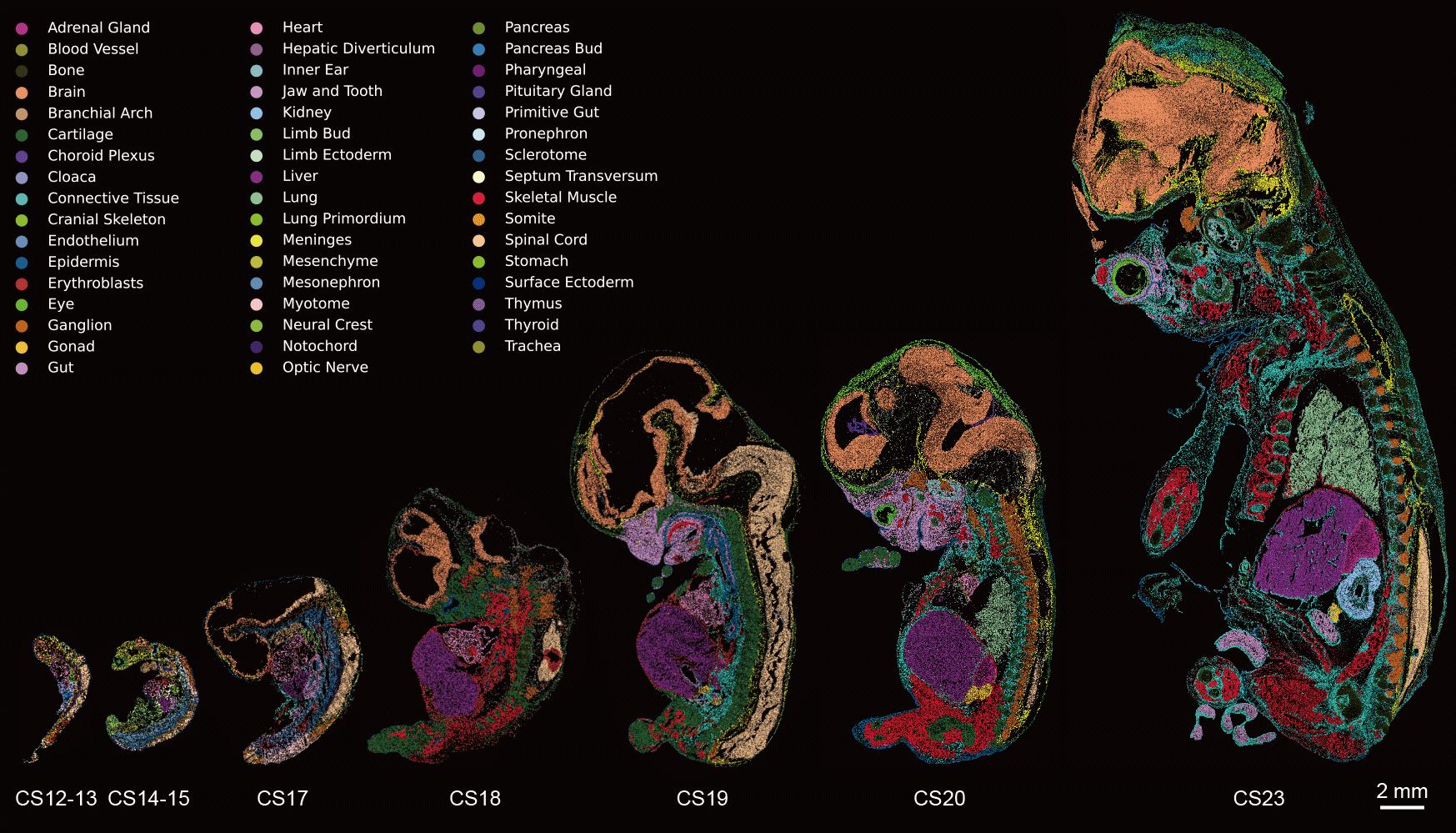
The spatial and temporal atlas of gene expression in human embryo at early gestation is critical in understanding embryo development, organogenesis and disease origins. Here, we obtained the spatial-temporal transcriptome from the 77 sagittal sections of 13 human embryos at 12-23 Carnegie stage (CS) by Stereo-seq, established the development trajectory/regulatory profiling of 50 organs, and identified the top organ-specific regulons with the highest score as the potential organ-identity regulators. The atlas refines the key organs/cell types that are vulnerable to virus infection and genetic disorders. We found dynamic changes of imprinting gene expression in specific organs at different stages. Our work, for the first time, revealed the time-lapse and spatial transcriptome dynamics of human embryogenesis after gastrulation.

Visualization

Access available processed data and metadata

Search for tissue annotation and gene expression at each developmental stage.

Introduces the overall structure and usage of the database.
How to cite